EURO 2024 - 10 Cities and Stadiums: Where Will Greatness Happen?
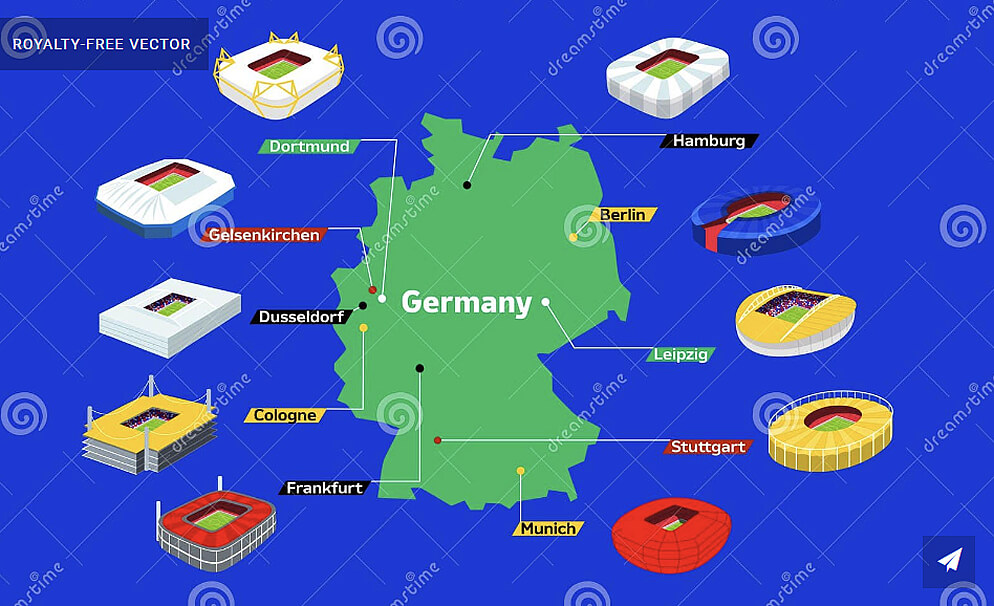
The UEFA Euro 2024 tournament takes place in Germany, with some major cities involved in hosting the flagship event. Where are the towns and stadiums?
By Sportypoll Staff @spoll_football
As arguably the most important international football tournament after the FIFA World Cup,
the UEFA European Championships bring together the best in European football for a clash of the continent’s titans.
Held every four years, this edition of the Euros will see the best of Europe come to Germany. Twenty-four teams make
it to the final tournament from 55 nations, and in the 65 years the tournament has been running, it has only grown
in quality and standard.
The host nation, Germany, are 3-times winners, making them the joint-most successful team in Euros history.
Germany will host the Euros for the third time from the 14th of June to the 14th of July. What, then,
are the host cities and stadiums? Where will the games be taking place across the 2024 European Championships?
Let us look at where fans will come in their thousands, even millions, to watch the tournament unfold!
UEFA Euro 2024 Cities And Stadiums: Where Is The Tournament Being Held?
During the selection process, ten venues were selected as the German Football Association ensured that major regions of Germany would have at least one stadium being used. Ten cities in total will host matches, and they are:
Berlin - Olympiastadion
Of course, the 71,000-seater national stadium, the Olympiastadion, will be used to host the European Championships. The national stadium in Berlin will likely be the host venue for the showpiece final, which will be held on the 14th
of July. The stadium was also host to the 2006 FIFA World Cup final and was previously used as the venue for the UEFA Champions League final. The stadium is used by Hertha Berlin, the ‘big’ club of the capital city.
The Olympiastadion opened its doors in 1936 for the Olympic Games and has been a staple of German sports ever since. Berlin is a tourist‘s dream, too, with key locations, including the Brandenburger Tor. This is a 230-year-old building that acts as the finishing line for the Berlin Marathon and is a symbol of Germany’s previous reunification between East and West.
Cologne – Cologne Stadiumt
he stadium in Cologne, known as the Cologne Stadium, is a 47,000-seater based in the carnival city of Cologne and is also home to the 1. FC Koln football team. Though it is one of the smaller venues in the tournament, it will still
be used for some flagship games, including the round-of-16 ties.
The stadium opened its doors in 1975, having undergone several overhauls during its opening years. It was used in the 2006 FIFA World Cup and the 1988 UEFA European Championships. The stadium has regularly held other sports, including ice hockey, and is a regular selection for gigs and events for major names
like the Rolling Stones.
Cologne is a city renowned for its beautiful architecture and cathedrals, and the Cathedral Church of Saint Peter is arguably the most prominent of all. It is considered Germany’s most visited tourist attraction, drawing as many as
20,000 guests daily. It took over half a millennium to build before being finished in 1880 and is a UNESCO World
Heritage site.
Dusseldorf – Dusseldorf Arenat
Lorem ipsum dolor sit amet, consectetur adipiscing elit. Ut elit tellus, luctus nec ullamcorper mattis, pulvinar dapibus leo.
Lorem ipsum dolor sit amet, consectetur adipiscing elit. Ut elit tellus, luctus nec ullamcorper mattis, pulvinar dapibus leo.
Add Your Heading Text Here
As one of the most iconic cities in the country, Dortmund is home to the famous Borussia Dortmund, and this incredible 66,000-seater stadium will be home to some of the best atmospheres in the tournament. Various big games will be played here, including a tie between Turkey an Portugal, a round of sixteen matches and a semi-final event on the 10th of July.
Despite boasting a capacity of over 80,000 usually, the seated nature of the event means the ‘Yellow Wall’ – the largest standing section in Europe – will not be quite at its vibrant best. Still, fans will enjoy a wonderful sporting experience from one of the most incredible stadiums in world football.
The stadium has been a host to finals, with the 2001 UEFA Cup Final held here. Dortmund is a deeply industrial city, and we recommend you take a tour of the Zeche Zollern, one of the great machine halls of Europe. It is now a stunning museum that celebrates the history of Dortmund. Closer to the stadium, you can explore the Ruhr region, which is cyclist friendly. This cycle path takes you from Dortmund’s stadium to other footballing stadiums in the area, including the grounds of rival Schalke.
Frankfurt – Frankfurt Arena
As one of Germany’s major financial hubs, the Frankfurt Arena is a must-visit for anyone visiting the city. Home to Eintracht Frankfurt, this 46,000-seater stadium will host games, including Denmark against England. It was first built in 1925 and has been renovated several times between the 1974 FIFA World Cup and today. It has been Eintracht’s home since it opened.
Of all the great things to see and do in Frankfurt, visiting the Skyline Plaza is recommended. Why? Because you will see one of Europe’s most beautiful skylines. Take yourself atop the city’s high-rise buildings and see the city unfold from the Skyline Plaza, based near the stadium itself.
Hamburg - Volksparkstadion
One of the few stadiums to keep its more ‘commercial’ sounding name for the tournament, the 50,000-seater
Volksparkstadion is home to the famous Hamburger SV. As one of the few German teams to lift the UEFA Champions League,Hamburg is a fixture of German football history, as is the city itself.
This stadium will host some interesting matches, most notably the quarter-final match to be held on the 5th of July. The stadium opened in 1953 and has undergone several renovations, most notably in 2000 when it was transformed for a modern football audience. Over the years, it has hosted various events and concerts, cementing Hamburg’s place as a tourist haven.
Speaking of tourism, many recommend you take the time to go down the River Elbe and visit the Elbphilharmonie.
Not only is it a beautiful view from the outside, but the sounds you hear inside are incredible. Those who love trains,the largest model railway design in the world, the Miniatur Wunderland, is nearby. This is the perfect way to relax before the fun begins!
Gelsenkirchen – Arena AurfSchalke
Home to the famous FC Schalke 04, this stadium is built on the city’s historical coal mining and steelmaking industries. Arena AurfSchalke, currently known as Veltins Arena, will host a few major games, including a tasty tie between Spain and Italy on the 20th of June. The stadium boasts a 50,000-seater capacity and opened its doors in 2001, making it one of the more modern stadiums in the country.
The stadium has been used for various sporting events, including the biathlon competition that is held here every year. It was also home to the 2004 UEFA Champions League Final when FC Porto defeated AS Monaco. There is much to do in the city of Gelsenkirchen, but we recommend that you take the time to visit the Schloss Horst. This is a view of old
16th-century Gelsenkirchen.
Those who want to get more up close to the old-school mining world of the city, though, should visit the Zeche Hugo.
This mine closed in 1997 but has since been re-opened so tourists can see the culture that is the city’s beating heart.
Hamburg - Volksparkstadion
One of the few stadiums to keep its more ‘commercial’ sounding name for the tournament, the 50,000-seater
Volksparkstadion is home to the famous Hamburger SV. As one of the few German teams to lift the UEFA Champions League,Hamburg is a fixture of German football history, as is the city itself.
This stadium will host some interesting matches, most notably the quarter-final match to be held on the 5th of July. The stadium opened in 1953 and has undergone several renovations, most notably in 2000 when it was transformed for a modern football audience. Over the years, it has hosted various events and concerts, cementing Hamburg’s place as a tourist haven.
Speaking of tourism, many recommend you take the time to go down the River Elbe and visit the Elbphilharmonie.
Not only is it a beautiful view from the outside, but the sounds you hear inside are incredible. Those who love trains,the largest model railway design in the world, the Miniatur Wunderland, is nearby. This is the perfect way to relax before the fun begins!
Leipzig – Leipzig Stadium
As the only host city based in East Germany, the Leipzig Stadium breaks new ground for many. The 42,000-seater stadium opened in 2004 and has become one of the most popular stadiums to visit in Germany.
It was part of the 2006 FIFA World Cup, and this tournament will cover games such as the tie between Croatia and Italy
and the Netherlands against France. The round-of-16 tie on the 2nd of July will be held here, too. RB Leipzig is the
team that plays its football in this stadium.
Tourism is a big part of Leipzig and we recommend that you come to check out the home of Johann Sebastian Bach. As one of the truly great composers of his era, Bach lived at the Thomaskirche for over 30 years during his life,
and the choir here focused on Bach’s work throughout the week—a very interesting place to visit for those who are
interested in seeing the culture behind Leipzig.
Munich – Munich Football Arena
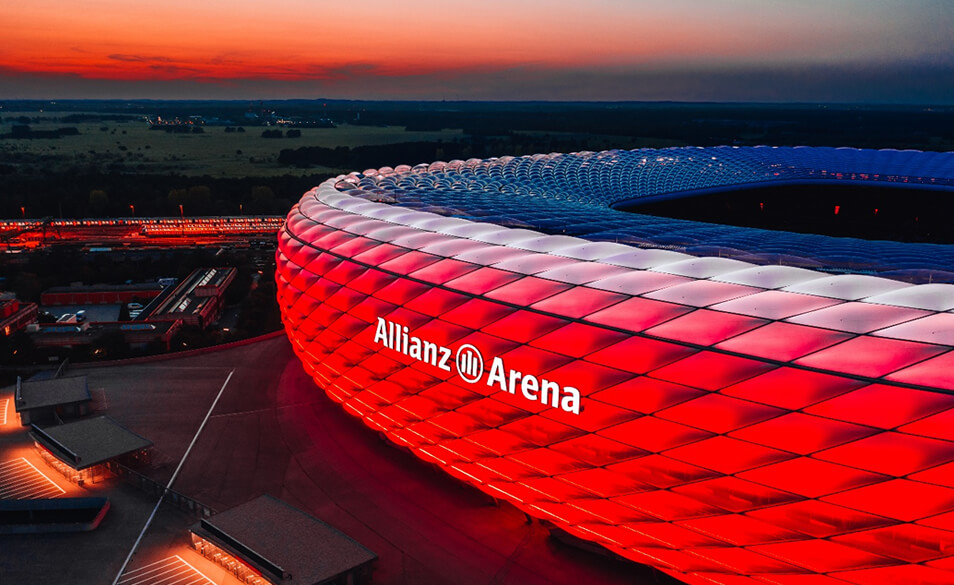
The third largest city in
Germany is also home to arguably its most opulent stadium. Home to the famous FC Bayern Munich, the stadium will host the opening game as Germany will play Scotland on the 14th of June to kick off
proceedings. The stadium is a stunning 67,000-seater and has been used by Bayern since it opened in 2005 as a
landmark part of the 2006 FIFA World Cup event.
The stadium has hosted many major football matches, including the 2012 UEFA Champions League Final, where FC Bayern lost to Chelsea on penalties in a remarkable turn of events. It was also part of the continent-wide 2020 UEFA European Championships, hosting three games.
Munich is a tourist paradise, with many things to go to and see. However, those who want to enjoy relaxation before the
football may wish to visit the Kunstareal. This location is great for those looking to visit museums and art galleries, with thousands of years of human creativity celebrated across this “art district” – great for a bit of low-tempo sightseeing before the football begins!
Stuttgart – Stuttgart Arena
Hosting some 54,000 people, the Stuttgart Arena is one of the most modern stadiums in Germany. Stuttgart is famous
for its automobile production, with major brands like Mercedes and Porsche operating out of here. The stadium is
used by VfB Stuttgart, one of the most successful teams in German football.
Built in 1933, the stadium has been renovated more than once and was used in the 1974 and 2006 FIFA World Cups, and the 1988 UEFA European Championships. It was also home to two UEFA Champions League finals, in 1959 and 1988. The stadium is a regular host to major concert shows such as Bon Jon Jovi. It will be home to one of the quarter-finals on the 5th of July.
Stuttgart is a city for foodies, and we recommend that you take the time to try out local foods. For those looking to see what makes Stuttgart such a special city, be sure to visit the Mercedes-Benz Museum near the stadium.
Which Stadium Will You Visit?
Famed for its football culture, Germany knows how to put on a show regarding football tournaments.Euro 2024 looks no different, with ten cities and ten venues that are remarkable in their grandeur, detail, and beauty. Whether you come for the football at the stadium itself, the local atmosphere, or the tourism, which of the UEFA Euro 2024 venues will you visit first?